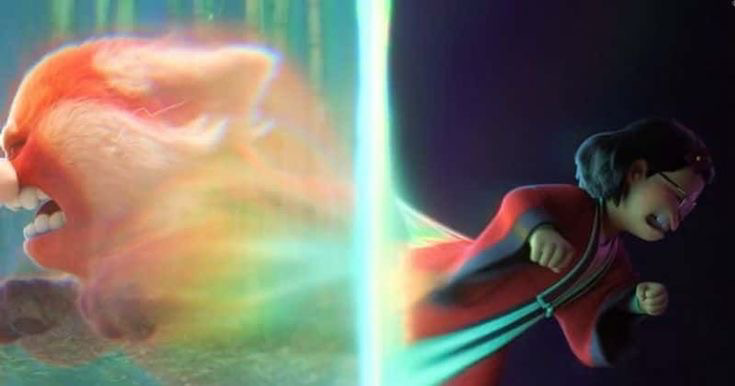
NASIONALISME.NET, Tangsel — Intergenerational conflict refers to tensions that arise between different generations within a family or community. This conflict occurs due to differences in values, beliefs, expectations, and life experiences between the older and younger generations. In the film Turning Red (2022), directed by Domee Shi, the story follows Meilin “Mei” Lee, a Chinese-Canadian teenage girl. Mei’s family adheres to spiritual beliefs rooted in tradition and maintains a temple. However, this spiritual belief holds a secret, which is perceived as a curse within the family.
The curse causes each female descendant to transform into a giant red panda whenever she experiences strong emotions. This fantastical element serves as a metaphor for the turbulent journey of adolescence and the conflicts that arise from it, particularly the intergenerational conflicts within her family.
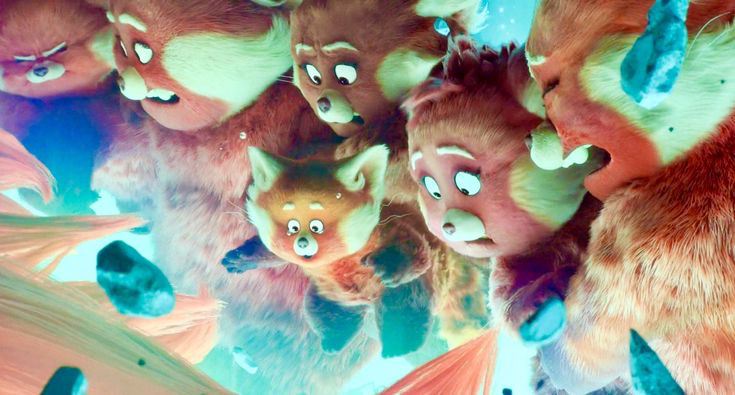
This film illustrates the mindset of the current generation, where young people have a more relaxed perspective on tradition. This contrasts with the older generation, who hold stronger and more rigid beliefs. According to Erikson (1968), adolescence is a critical period for an individual struggling to form their own identity, but this often causes tension with the older generation who uphold traditional values. This is evident when Mei chooses to embrace her side of the “curse” of becoming a giant red panda. This differs from her ancestors, including her mother and grandmother, who chose to suppress or release the curse.
In the film Turning Red (2022), the tension between cultural assimilation and preservation is also shown. Mei’s mother, Ming, represents the desire of the older generation to uphold Chinese cultural traditions. On the other hand, Mei is influenced by her Canadian environment and the modern era in which she grows up. According to Berry (1997), this cultural dichotomy eventually leads to misunderstandings and conflicts, as Mei feels pressured to align with her family’s expectations while also wanting to embrace her individuality. This illustrates the struggle between integration and separation.
The transformation of Mei into a red panda symbolizes the intense emotional and psychological struggles faced by adolescents, exacerbated by intergenerational conflict. The panda represents Mei’s repressed emotions and the pressure to meet her mother’s expectations, which she doesn’t truly desire. Similarly, her ancestors, including her mother, also experienced pressure from Mei’s grandmother. Just as Mei is forced to be perfect in everything, so was her mother. According to Wharton (2009), this generational conflict aligns with the concept of emotional labor, where one manages their own emotions to meet social or familial expectations. This often results in sacrificing their mental health due to the emotional toll and pressure.
In conclusion, the film Turning Red (2022) effectively portrays the complexity of intergenerational conflict. Through Mei’s journey, the film shows how teenagers struggle to balance cultural expectations with personal identity. By highlighting the emotional and psychological impact of this conflict, the film provides valuable insight into the challenges faced by each generation and emphasizes the importance of understanding and addressing intergenerational conflicts.
References:
- Shi, D. (Director). (2022). Turning Red [Film]. Pixar Animation Studios; Walt Disney Pictures.
- Erikson, E. H. (1968). Identity: Youth and crisis. W. W. Norton & Company.
- Berry, J. W. (1997). Immigration, acculturation, and adaptation. Applied Psychology: An International Review, 46(1), 5–34. https://doi.org/10.1111/j.1464-0597.1997.tb01087.x
- Wharton, A. S. (2009). The sociology of emotional labor. Annual Review of Sociology, 35, 147–165. https://doi.org/10.1146/annurev-soc-070308-115944
Written by Neni Nuraeni