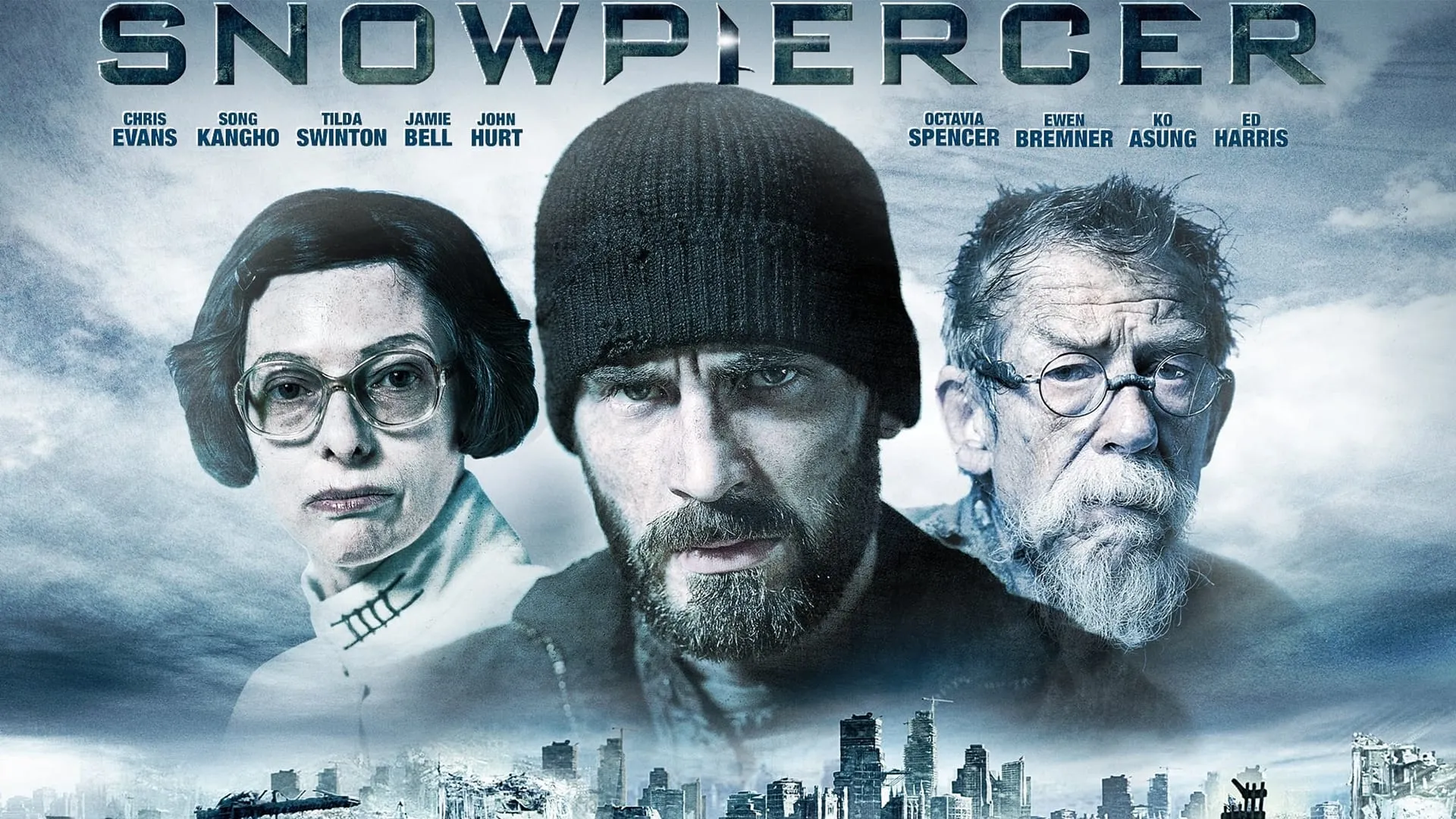
NASIONALISME.NET, Tangerang — Social inequality is often perceived as the result of differences in economic wealth; however, sociologists argue that inequality is also maintained through unequal access to knowledge, education, and cultural resources. In Snowpiercer, this issue is represented through a train divided into rigid social classes, where passengers in the tail section live in poverty while those in the front enjoy privilege, comfort, and authority. The film illustrates how inequality is reproduced through unequal access to opportunities and resources rather than through individual ability alone. Through the train’s social structure, Snowpiercer demonstrates that social mobility is not equally available to everyone, making class divisions difficult to overcome.
The unequal distribution of cultural capital is evident in the contrast between the front and tail sections of the train. While the elite have access to education, technology, and knowledge about how the train operates, passengers in the tail section are denied these opportunities and are forced to focus solely on survival. According to Pierre Bourdieu’s Cultural Capital Theory, cultural capital consists of knowledge, skills, education, and cultural competencies that provide individuals with social advantages. In Snowpiercer, access to these resources enables the upper classes to maintain their dominant position, while the lower classes remain excluded from opportunities that could improve their social status.
The reproduction of social inequality is also reflected in the way privilege is transferred across generations. Children raised in the front sections grow up with access to education, security, and social recognition, whereas children in the tail section inherit conditions of poverty and marginalization. This situation supports Bourdieu’s argument that cultural capital is often transmitted from parents to children, allowing social advantages to persist over time. As a result, inequality becomes self-reinforcing, as privileged groups continue to accumulate resources while disadvantaged groups remain trapped within the same social conditions.
The experiences of Curtis and the tail-section passengers further reveal the limitations of social mobility within a highly unequal system. Although they physically move through the train in an attempt to reach the front, they encounter numerous barriers that demonstrate how deeply inequality is embedded within the social structure. Their struggle challenges the common belief that hard work alone is sufficient to achieve upward mobility. From Bourdieu’s perspective, social advancement depends not only on individual effort but also on access to various forms of capital that are unequally distributed throughout society. Consequently, individuals from lower social classes often face obstacles that cannot be overcome through determination alone.
Through its depiction of class divisions and unequal opportunities, Snowpiercer illustrates how social inequality is continuously reproduced through cultural capital. The film suggests that privilege is sustained not only by economic wealth but also by access to knowledge, education, and social advantages that remain inaccessible to lower-class groups. By highlighting these structural inequalities, Snowpiercer challenges the idea that social mobility is equally attainable for everyone and encourages viewers to question the systems that maintain class hierarchies in contemporary society.