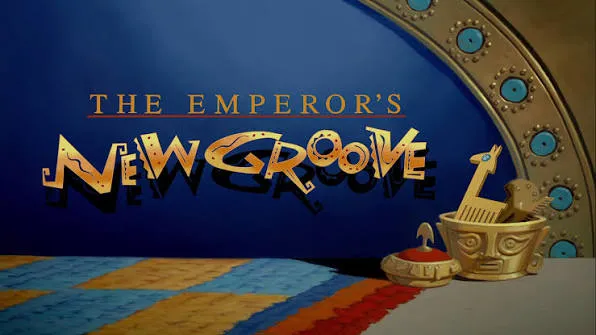
NASIONALISME.NET, Tangerang — The Emperor’s New Groove (2000), directed by Mark Dindal, explores the abuse of power. Kuzco, a selfish emperor, plans to destroy Pacha’s village to build a private resort. After being betrayed and turned into a llama, he gets lost and must rely on Pacha for help. Throughout their journey, while being pursued by Yzma and Kronk, Kuzco gradually learns about friendship, teamwork, and empathy. By the time he returns to the palace and becomes human again, Kuzco has changed; no longer arrogant, he values others and treats them with respect.
This essay discusses the impact of power abuse on individuals who are vulnerable to exploitation and control. Isniati (2006) states that those in power often exploit others for personal gain, manipulating or controlling those they see as weaker. This can be seen through selfish decisions made without regard for others. In The Emperor’s New Groove, power abuse is clearly seen when Emperor Kuzco makes decisions that benefit only himself.
Kuzco uses his power to make decisions that benefit only himself, disregarding the impact on those around him. His decision to build Kuzcotopia on a village that Pacha calls home demonstrates how he completely ignores the well-being of the people living there.
Figure 1
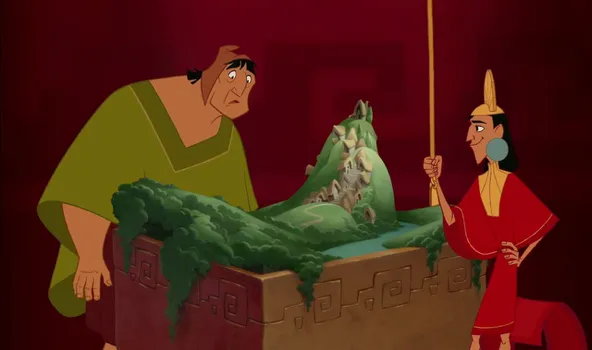 Abuse of Power for Personal Gain
Note. Kuzco informs Pacha that his village will be destroyed so that a luxurious summer palace called Kuzcotopia can be built. The Emperor’s New Groove [00:08:48], by Mark Dindal (director), 2000, Walt Disney Pictures.
Emperor Kuzco casually reveals his plan, “At my birthday celebration tomorrow, I give the word, and your town will be destroyed to make way for this…” (Dindal, 2000, 00:09:51-00:09:59. Pacha, deeply concerned, defends his village and asks, “But, where will we live?” (Dindal, 2000, 00:10: 08-00:10:09. This moment reflects Kuzco’s disregard for the lives of others, using his power solely for personal gain without any empathy for those affected. The scene uses a medium shot to show Kuzco and Pacha standing on opposite sides of a miniature representation of Pacha’s village. Kuzco, in red, is on the right, symbolising power, while Pacha, in green, stands to the left, representing nature and humility. The colour contrast highlights the social and moral divide between them. The still camera and balanced composition emphasise the tension in their conversation as Kuzco confidently presents his plan, unaware of its impact on Pacha’s village.
When they are trapped in the jungle, Kuzco continues to show his selfish attitude, “But now that you’re here, you will take me back to the palace. I’ll have Yzma change me back, and then I’ll start construction on Kuztopia” (Dindal, 2000, 00:31:56-00:32:03). This frustrates Pacha, leading him to confront Kuzco honestly, “How can you be this way? All you care about is building your summer home and filling it with stuff for you” (Dindal, 2000, 00:32:38-00:32:43).
Figure 2
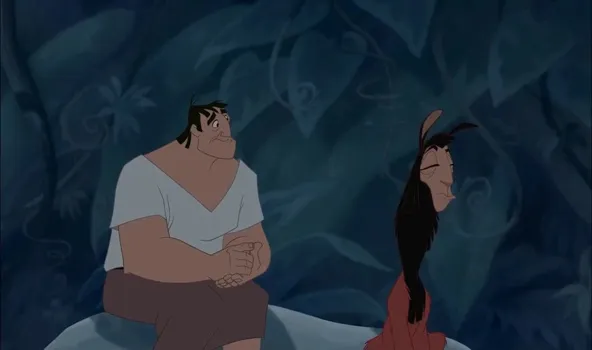
Kuzco Forces Pacha to Help Him Return to the Palace
Note. While trapped in the jungle after being transformed into a llama, Kuzco continues to display his selfish attitude. The Emperor’s New Groove [00:32:36], by Mark Dindal (director), 2000, Walt Disney Pictures.
At the beginning of his transformation into a llama, Kuzco treats Pacha rudely, arrogantly, and condescendingly, as if his status as Emperor still gives him power over everything. He views Pacha not as a friend or helper, but merely as a means to return to the palace and regain his human form. This scene uses a medium shot that allows the audience to see their facial expressions and body language clearly. Pacha is seen sitting with his hands clasped, showing patience or confusion, while Kuzco turns his face with an expression of arrogance and indifference. The eye-level angle presents them on equal footing, emphasising their contrasting personalities. The background features bluish-green tones, creating a melancholic atmosphere that underscores the characters’ vulnerability.
As Kuzco tries to return to his human form, his attitude begins to change. When Pacha is about to fall, he panics and shouts, “Kuzco!” (Dindal, 2000, 01:08:14-01:08:15). Kuzco initially replies, “Be right there! Give me a minute!” (Dindal, 2000, 01:08:16-01:08:17). But after realising the danger Pacha is in, he abandons the potion and rushes to save him. This decision marks Kuzco’s growth toward understanding friendship and sacrifice.
Figure 3
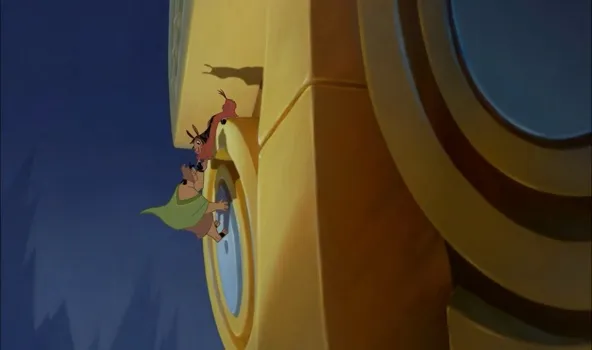
Kuzco Chooses to Save Pacha Instead of Taking the Potion
Note. Kuzco chooses to save Pacha instead of taking the potion. The Emperor’s New Groove [01:08:32], by Mark Dindal (director), 2000, Walt Disney Pictures.
This scene employs a high-angle shot to emphasise the vulnerable position of Kuzco and Pacha on the tower, highlighting the danger they face. The camera angle makes them appear small and powerless, reinforcing the tension of the moment. Their emotional exchange is conveyed through body language and facial expressions, revealing Kuzco’s internal conflict. Warm golden hues on the tower contrast with the dark blue night sky, symbolising Kuzco’s shift from selfishness to empathy. These visual elements underscore his decision to prioritise friendship over personal gain.
When Kuzco returns to his human form, he begins to treat others with kindness and respect, a stark contrast to his former arrogance. One moment that clearly reflects this transformation is when he reunites with the old man he had previously fired suddenly and harshly. Instead of acting superior as he once did, Kuzco now shows humility and remorse.
Figure 4
Kuzco shows humility toward the man he once treated unfairly
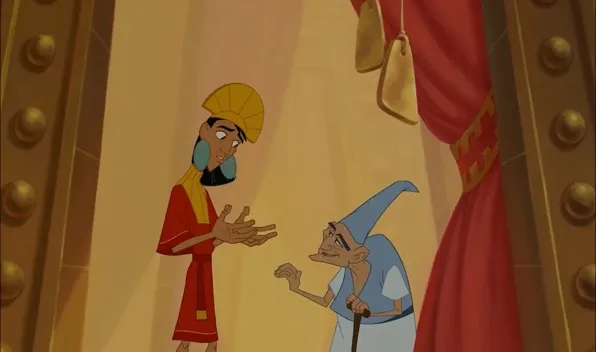
Note. Kuzco meets the old man he previously threw out the window, showing humility as the old man grants forgiveness. The Emperor’s New Groove [01:10:05], by Mark Dindal (director), 2000, Walt Disney Pictures.
The old man, without holding a grudge, sincerely says, “Now, you stop being so hard on yourself. All is forgiven” (Dindal, 2000, 01:10:02-01:10:05), and Kuzco hesitantly replies,
“You’re sure?” (Dindal, 2000, 01:10:06-01:10:07). His response shows self-doubt, reflecting the level of self-awareness. This shift in Kuzco’s character symbolises the film’s title, The Emperor’s New Groove. “Groove” refers to a rhythm, symbolising Kuzco’s personal transformation from a selfish ruler to a more empathetic, compassionate Emperor. This scene uses a medium shot to show Kuzco and the old man. Kuzco, with crossed arms, looks uncomfortable, while the old man stands open and smiling, symbolising forgiveness. Kuzco’s red attire, usually tied to power, is softened by warm lighting, reflecting his attitude change.
The old man’s neutral colours highlight humility, and the warm background tones create intimacy. The static camera and balanced composition emphasise Kuzco’s transformation and the calmness of the moment.
In conclusion, Kuzco’s journey from an arrogant emperor to a compassionate person is shown through four important scenes in the film: his selfish decision to destroy Pacha’s village, his harsh behaviour while transformed into a llama, and the turning point when he saves Pacha and ultimately expresses remorse to the old man he once wronged. These changes are supported by strong visual and narrative elements, making The Emperor’s New Groove a profound reflection on the consequences of power abuse and the transformative power of human connection.